Monday, September 29, 2014

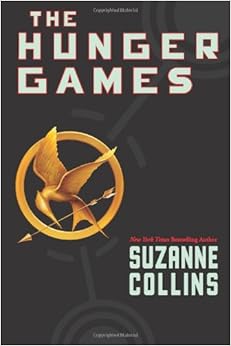
The Hunger Games (soap box and spoiler alert)


       As I began researching for a book list on "The Best New Series" (coming later this week), I was reminded of this article that I wrote about the Hunger Games during the peak of its hype. I know I am posting this late. The hype is over, but I wanted to address why I'll never recommend books like this on my blog. So here it is, the inevitable hunger games rant:

       I read the hunger games and enjoyed it. The idea is intriguing, the characters solid, and the story extremely fast paced and exciting. After finishing, I spent some time sitting on my bed  thinking about it. I presume you have all experienced this same after-novel “Now what?” ritual. What does it all mean? Would I want to read the sequel?
         I tried hard to justify myself. The Hunger Games is certainly entertaining, but I needed a better reason to continue reading the series. I was searching for a warrant to jump on the all-to-crowded band wagon of fans. The fact that the book ends with the capitol reigning strong, the main protagonist in danger, and a potential love story hanging by a thread, is obviously an attempt by the author to leave readers hungry (no pun intended) for more. After finishing this story and considering it for a few minutes, I decided I was done. I needed to move on, no matter what the rest of the universe did. 
      We’ve all studied Ancient Rome; didn’t we feel repulsed when our teachers explained to us the concept of gladiator games? How could humans accept such a morbid pastime? And yet now with the recent hype over this book series, I am beginning to question wether our culture has really advanced much since the days when killing was an acceptable form of amusement. 
     
        “Oh, well the Hunger games does not justify the evil. The capitol is bad...” 

       Poor people forced to watch children kill each other: sad. The government watches innocent children kill each other for fun: vulgar. You call it vulgar, the author calls it vulgar. And yet who is standing in line to buy the next book and buying a movie ticket to watch a simulation of the very same game we all despise the capitol for enjoying? Do you think you will feel pleasure when a young girl gets a spear thrust right through her? 
       Dystopian novels have been a popular form of entertainment for a long time. However in recent years, we are seeing a new and alarmingly vulgar breed. In the past, dystopias were used as a slippery slope analysis of some element of culture. In other words, they had a moral, a message, or a warning. For example, George Orwell's famed “1984” presents a vivid and awful picture of what our world could become if we passively allow the build up of a totalitarian state in the name of peace and security. It uses a story full of tragedy and torture to send a message of warning.        
       The hunger games presents the same kind of dystopia - although you could say that in a humane sense the obscenities filling The Hunger Games are more evil then even Orwell could have imagined. And yet there is no moral. As I sat on my bed contemplating the meaning or message of the book, I had to give up. There is no message. I hadn't learned anything. This terrible world was created for maximum excitement, maximum adventure, maximum thrill. In other words, it was created solely for the readers pleasure.

       
       To me, that's bad taste. 
<a href="http://www.bloglovin.com/blog/10747769/?claim=h8q2y3ptxcv">Follow my blog with Bloglovin</a>


Thursday, September 25, 2014

Why I Read (Or Why You Should Read)

I am back to the thousand acre wood! To kick back my blogging, I've decided to post this article from my personal blog:


             What a joy it is to step out of my own little life for an hour or so every day and exist in the world of someone else. What a lesson, to view the human condition from a slightly more omni-present perspective. The more time I spend outside of myself and amongst the cares of (albeit fictional) other people, the more I see my own life as part of a larger whole. And the more willing I become to live my life accordingly. 

            One of my goals for gap year was to give myself time to dive into great fiction and non-fiction. I find reading to be terribly important. Not just because it is one of the most pleasurable activities in my life, but because: 


1. Empathy

   Studies have found that reading literature actually helps to increase your level of empathy. To read a great book is to enter into a world that is not your own. It is to step out of your own troubles and consider the troubles of others. It has helped me personally to realize that the universe is full of people who think and feel like me. The more time you spend engaging in the lives of others, the less your life seems to stand out as particularly special, and the more you care about the troubles of others. 


2. Escape 

      Sometimes I just need a break from life. Reading great literature provides a healthy way to get that much needed recharge. There are certainly other ways to escape our troubles, but I still find literature to be the most healthy for me. If I go down another route and indulge in one of my guiltiest pleasures, say... a Korean drama, murder mystery, or romance, I do enjoy myself during the activity but am left afterwards unprepared to reenter reality. Romance causes me to be either unrealistic or bitter. Mystery and action often leave me just plain out of touch with the real world. Although reading literature helps me escape reality for a bit, it doesn't leave me unwilling to come back to my life in the end. In fact, somtimes I feel like realistic fiction helps prepare me for life. 


3. Experience

    Which leads me to point three. Call me niave, ignorant, or homeschooled. I've had peers accuse me of all three crimes at once! And yet it is I who watch them creating terrible situations for themselves while I mumble under my breath: "don't do that! Can't you see? It is just like Natasha Bolonsky!" Despite a rather sheltered upbringing, I don't feel extremely underprepared for life. Sometimes I feel like I've garnered just a bit of life experience vicariously through the thousands of lives I've read about. In fact, some recent studies have indicated that reading great literature may help improve social skills!

4. Smarts

    Reading gives the brain a workout. From dicephering sentences and analyzing the causes and effects of situations to visualizing scenes and characters and prediciting future situations, there is a lot that goes on while you read. I don't want to let my brain get fat and lazy during gap year. So consider this afternoon's Anna Karenina marathon a brain workout. 


5. Writing

    My younger sister went through a Karen Cushman phase last year. As her writing coach, I was amazed to see that the more Cushman books she read, the more her writing looked like her favorite author's. Multiple people have told me: "if you are feeling writer's block, put your pen down and read!" If immersion is the best way to learn foreign languages, couldn't it also help us to master our own? By exposing myself to the best the English language has to offer, I hope to spontaneously digest and assimilate vocabulary, syntax, and story structure that can help me improve my own writing. 

6. Solving Problems 

     Some of my biggest problems in life have been solved by books. Relgious questions I had were answered in the darkest pits of Crime and Punishment. A bout of entitlement and unthankfulness was cured after reading Esperanza Rising. Some of my middle child fears and complaints were dissolved whilst devouring Jacob Have I Loved. And important questions I never knew to ask were raised while reading Tolstoy's Family Happiness. I could give you example after example of times books have helped me deal with real life situations.

     And with that, I think I have fully convinced myself that stopping life to readAnna Karenina all afternoon will be okay after all. 

If your interested, here are some fancy articles about the stuff I talked about: